author bio seo eeat
Does Google Care Who Wrote It? Why Author Bios Matter for SEO and AI
Google and AI tools look for real experience behind advice. A short, honest author bio can make your content more trusted. Here is what to include and where.
Authority & TrustUpdated 2 min readBy Kanchana Delgoda, Search and AI visibility
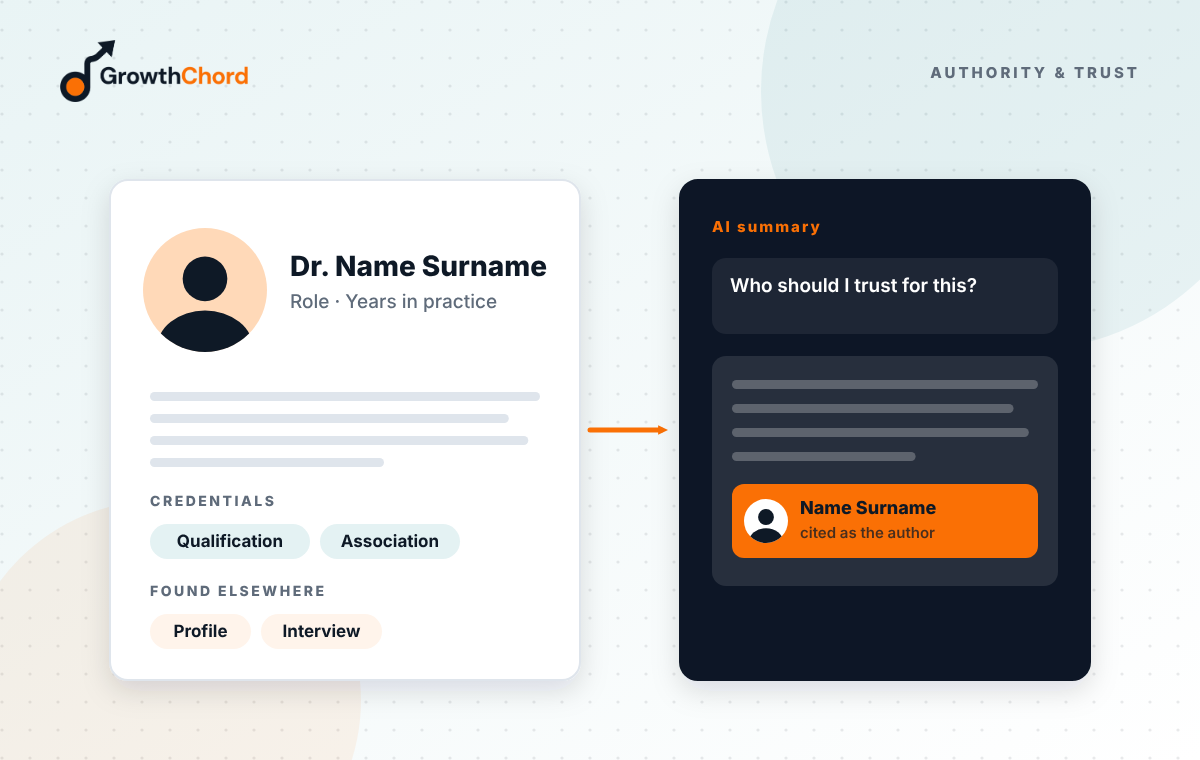
Short answer: yes. Google and AI tools look for signs that real, experienced people stand behind content, especially advice that affects money, health or safety. A short author bio with a name, role, relevant experience, photo and a link to a verifiable profile makes your articles more trustworthy to readers and machines alike.
Anyone can publish advice online, and AI tools can now produce endless generic articles. That makes real experience more valuable. Readers want to know who is talking. So do Google and the AI tools that decide which sources to quote.
Why does authorship matter more now?
Because generic content is everywhere. When many pages say similar things, the one written or checked by someone with real, visible experience is more likely to be trusted, ranked and cited. Google's quality guidelines put weight on experience and expertise for exactly this reason.
What makes a good author bio?
- Name and photo. A real person, not "Admin".
- Role. "Founder, 12 years installing solar systems across Sri Lanka."
- Relevant experience. What they have actually done, in specifics.
- Qualifications or memberships, if relevant.
- A link to verify, such as LinkedIn or an industry profile.
Two or three sentences is enough.
Where should bios appear?
At the top or bottom of each article, on an author page that lists their articles, and on your About page. Use the same name and description everywhere so the person is easy to recognise across the web.
What if the business writes as a team?
That is fine. Credit the team, and add "Reviewed by" with the name of the expert who checked the content. This is common and honest.
How do you show experience inside the article?
Mention real situations: "When we inspect roofs after the monsoon, the most common problem is..." First-hand details are the strongest proof of experience, and they are what AI tools find most worth quoting.
What should you avoid?
Invented authors, fake credentials, stock photos as headshots, and bios that are pure sales copy. These damage trust if discovered.
How does this connect with schema?
Add Person and Article schema so search engines can connect the author to the content and to their profiles. It helps machines understand who is behind each page.
Meet the people behind GrowthChord on our About page. Want your experts' knowledge turned into content that gets cited? Request a free growth audit.
- Authority
- Trust Signals
- E-E-A-T