build trust on website
Why Visitors Don't Trust Your Website (And the Proof That Fixes It)
People land, hesitate and leave. Usually they cannot see enough proof when they need it. These are the trust signals that turn hesitation into enquiries.
Conversion UXUpdated 2 min readBy Kanchana Delgoda, Search and AI visibility
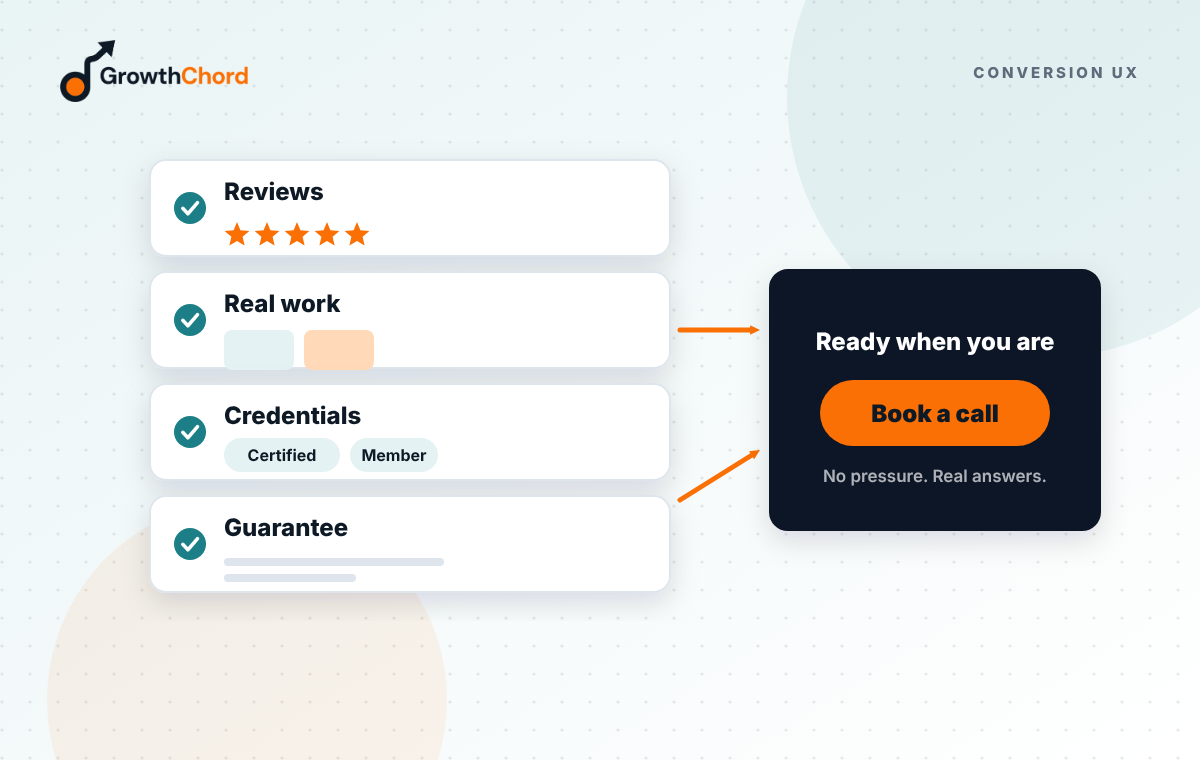
Short answer: visitors leave when they are not sure you are real, good and safe to deal with. Fix it by placing proof right where they decide: reviews with names, photos of real work and people, clear prices, guarantees, your address, and the brands or organisations that vouch for you. Proof at the bottom of the page is too late.
Online, a new customer cannot see your shop, shake your hand or ask a friend. They have only your page. Every doubt they cannot settle quickly becomes a reason to go back to Google and try someone else.
What are people really worried about?
- Are you a real, established business?
- Are you any good at this?
- Will it cost more than I expect?
- What happens if something goes wrong?
- Will anyone actually reply?
Each of these needs an answer on the page.
Which proof works best?
Reviews with detail. Names, the service used and the result. "Fixed our water pump the same evening" beats "great service".
Real photos. Your team, your premises, your work. Stock images make people suspicious.
Clear prices. Even a starting price reduces fear of a surprise.
Guarantees. A warranty, a refund policy, or a promise like "free re-visit if the problem returns".
Visible contact details. Address, phone, WhatsApp and opening hours. Hidden details feel like a warning sign.
Third-party proof. Industry memberships, certifications, press mentions and client logos you have permission to show.
Case studies. Short before-and-after stories with numbers.
Where should the proof go?
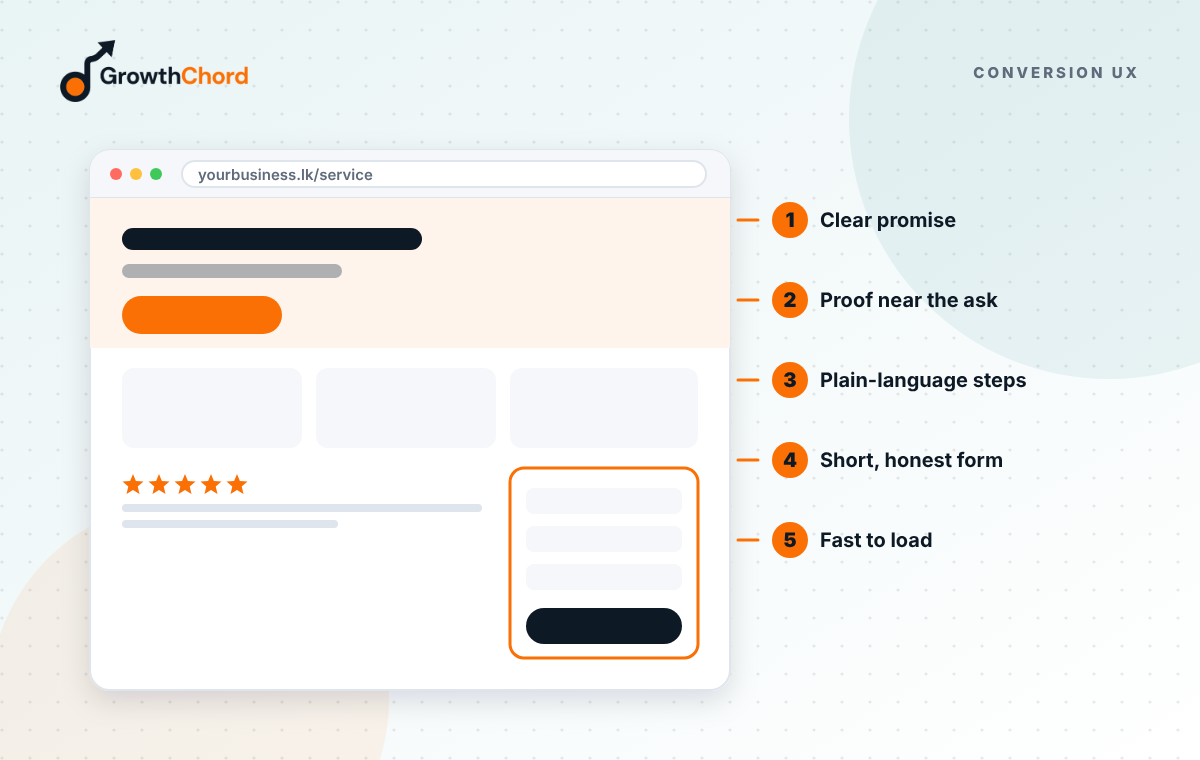
Near the top of the page, so first impressions are reassuring, and right next to every call or enquiry button, where hesitation is strongest. A short review beside "Call now" can do more than a full testimonials page nobody visits.
What hurts trust?
Spelling mistakes, broken links, an old copyright year, no address, stock photos, unanswered negative reviews and pages that load slowly. Small things add up.
How does this help with Google and AI?
Google and AI tools look for the same signals: real people, real location, consistent details and outside proof. Building trust for visitors also builds it for machines.
Our web development and photography teams build these proof blocks into every page. Want to know where your site loses trust? Request a free growth audit.
- Conversion UX
- Landing Pages
- CRO