content performance analysis
Which Blog Topics Should You Double Down On (and Which Should You Stop)?
Not every blog topic deserves more posts. Use this simple test with Search Console data to decide where to write more, what to improve and what to stop.
Measurement & ROIUpdated 2 min readBy Kanchana Delgoda, Search and AI visibility
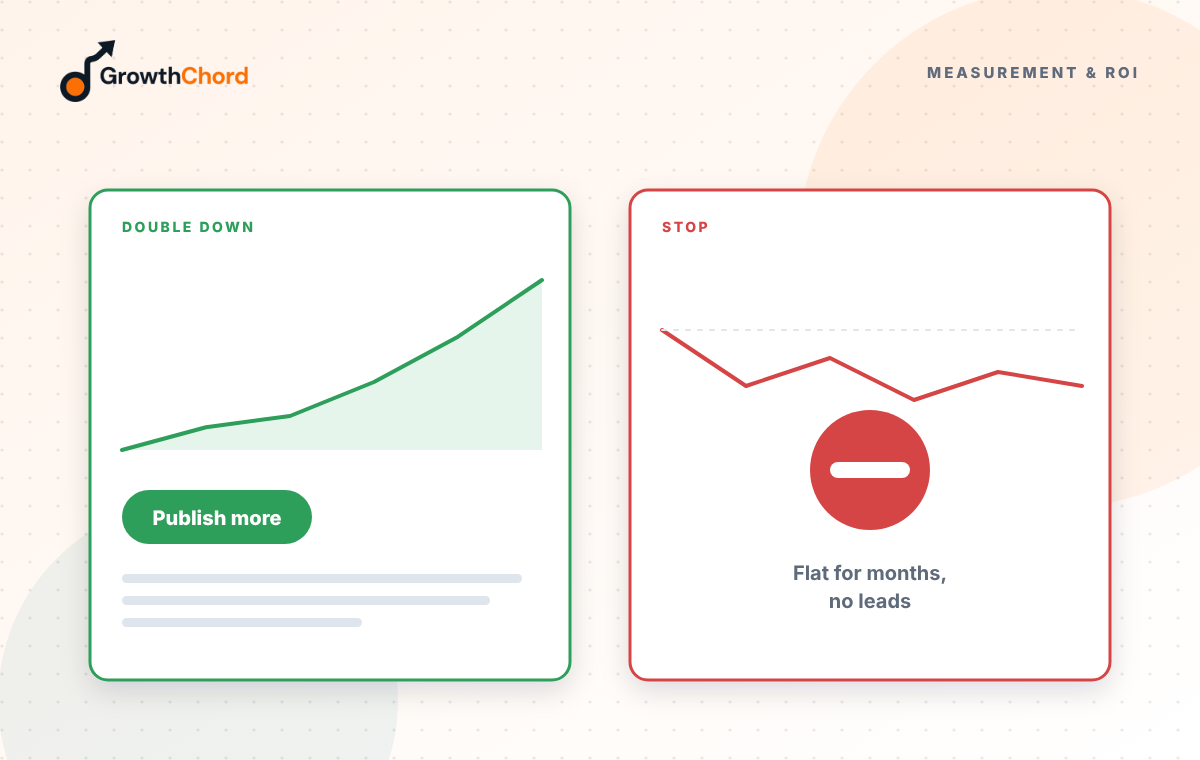
Short answer: double down on topics that already get impressions from the right people and lead readers to contact you or view a service page. Improve topics that get impressions but few clicks. Stop topics that bring readers who never become customers, or where you cannot be better than what already ranks.
A content calendar fills up easily. The hard part is knowing which topics are worth more effort. Writing ten more posts on a topic that never brings customers is a quiet way to waste a year.
How do you score each topic?
Group your posts by topic, then check three things for each group over the last three to six months:
- Demand: are impressions in Search Console growing?
- Fit: do the searches come from people who could buy from you?
- Action: do readers click through to service pages, call or message?
A topic that scores well on all three deserves more posts. A topic that fails "fit" should stop, however much traffic it gets.
When should you write more?
When a topic has impressions for many related questions you have not answered yet. Search Console shows the exact searches. If people are searching "solar panel price for a 3 bedroom house" and you only have a general solar guide, that is your next article.
When should you improve instead of adding?
When posts get impressions but a low click rate, or rank on page two. Usually a better title, a direct answer at the top, fresher facts, or a few internal links will do more than a new post.
When should you stop?
- The topic attracts students, job seekers or other agencies instead of buyers.
- You cannot add anything better than the top results.
- The topic has nothing to do with what you sell.
Stopping is not failure. It frees time for topics that pay.
What about posts that are already published?
Keep the useful ones, merge thin posts that cover the same thing into one stronger article, and redirect the old addresses to it. This makes your site clearer to Google and to AI tools.
How often should you review this?
Once a quarter is enough. Put the topic scores in a simple sheet and make decisions from it, not from gut feeling.
We run this review as part of our SEO service. For a quick look at your own blog, request a free growth audit.
- Measurement
- ROI
- Reporting