long tail keywords small business
Why Ranking for 'Digital Marketing' Won't Pay Your Bills
Big keywords look impressive but rarely bring customers to small businesses. Here is why specific, local searches win, and how to find the ones that sell.
Search IntentUpdated 2 min readBy Kanchana Delgoda, Search and AI visibility
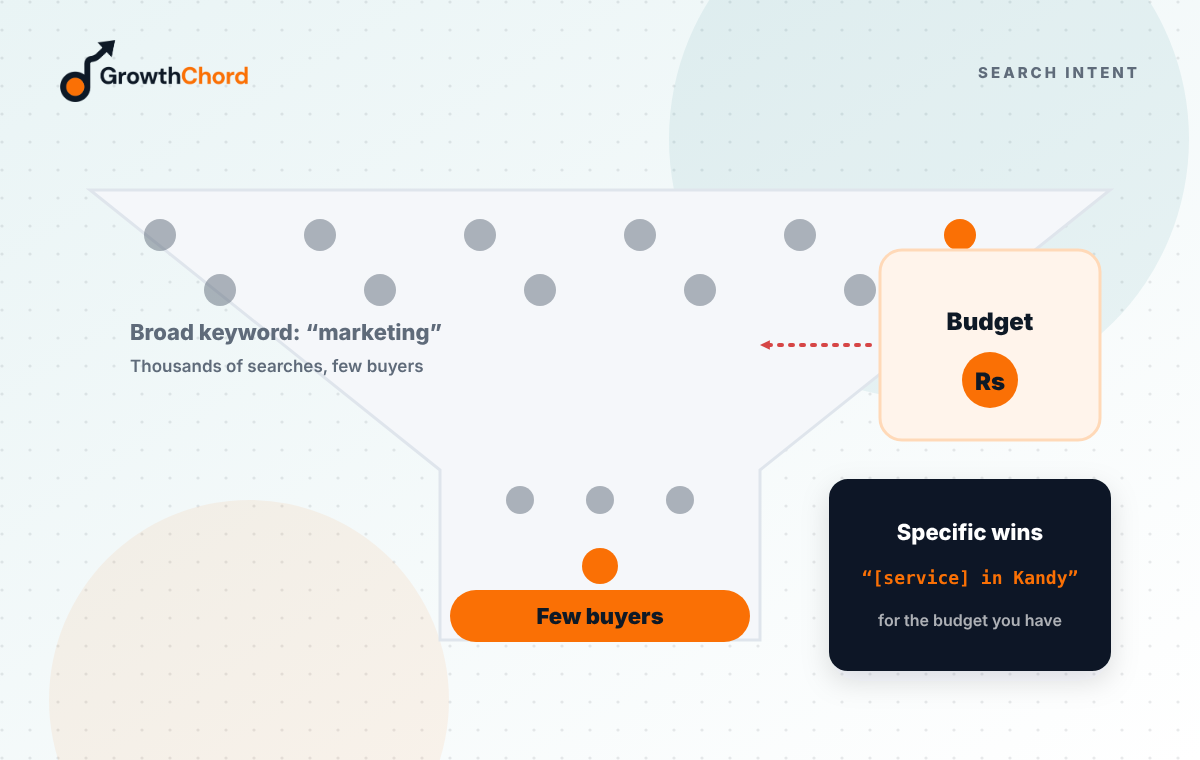
Short answer: broad keywords like "digital marketing" or "hotel" are crowded with big websites and full of people who are not ready to buy. Small businesses win with specific searches that combine a service with a place, a price, a problem or a type of customer. Fewer people search them, but far more of those people buy.
Every business owner wants to rank for the big word. A tile shop wants "tiles". A dentist wants "dentist". It feels like the prize. In practice, it is usually the most expensive way to get the fewest customers.
Why do broad keywords disappoint?
The competition is huge. National brands, directories and news sites already hold those spots.
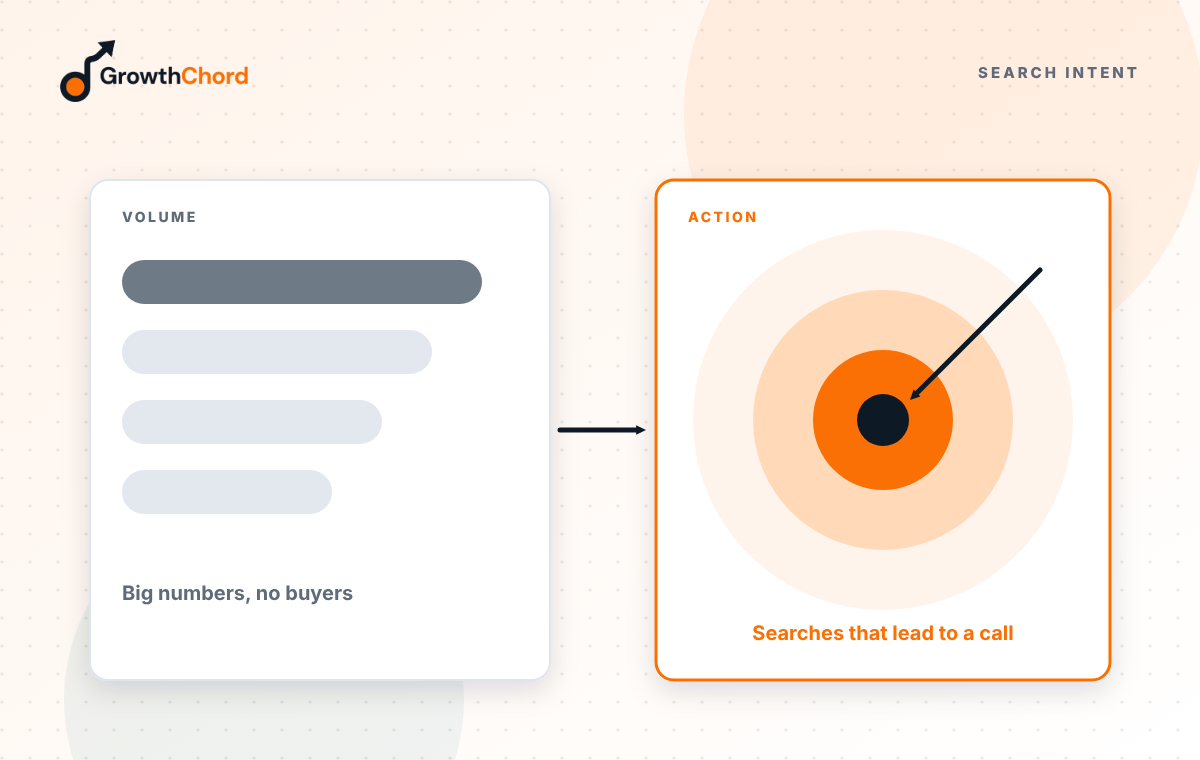
The intent is mixed. Someone typing "tiles" might want pictures, a definition, a DIY video or a job. Only a small slice wants to buy from a shop in your area.
It takes a long time. Even if you get there, it can take a year or more, with nothing to show in between.
What do specific searches look like?
Add one of these to your service:
- A place: "bathroom tiles Kurunegala"
- A price: "wedding photography packages under 200000"
- A problem: "roof leaking during monsoon repair"
- A type of customer: "accountant for small exporters"
- A comparison: "porcelain vs ceramic tiles for kitchen"
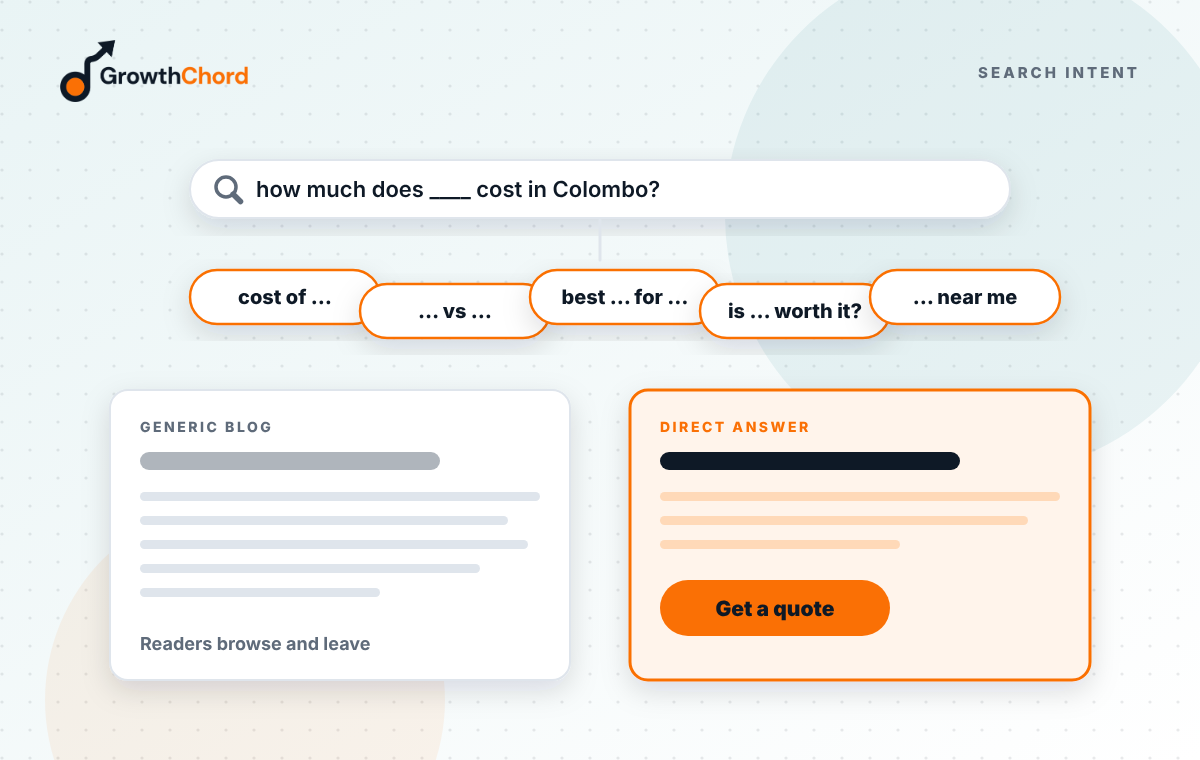
Each of these is typed by someone much closer to a decision.
How do you find the specific searches that sell?
- Write down the exact questions customers ask on calls and WhatsApp.
- Type your service into Google and note the autocomplete suggestions.
- Open the People Also Ask box and collect the questions.
- Check Search Console for searches you already appear for.
- Ask ChatGPT what someone in your area would search before hiring you.
How should you use them on your site?
Give each important service and area its own page, built around a specific search. Answer the question in the first lines, show prices and proof, and make contact easy. Then write articles for the problem and comparison searches, linking back to those pages.
Do broad keywords ever make sense?
Yes, later. As your site earns trust from many specific pages, it becomes stronger for broader terms too. Start narrow, win, and widen.
Our SEO service starts with this kind of keyword map. Want to see which specific searches you could win quickly? Request a free growth audit.
- Search Intent
- Keyword Strategy
- Buyer Journey